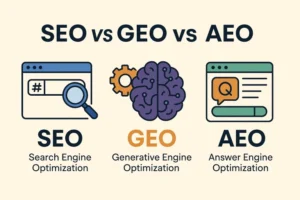
Optimizing Your Brand for AI-Driven Search: Best Practices for Visibility in the Future of Search Engines
The world of search engines is changing rapidly, and at the heart of this transformation lies Artificial Intelligence (AI). With AI-driven search engines becoming more prevalent, traditional SEO practices are no longer enough to maintain visibility. If you want your brand to stand out in the ever-evolving digital landscape, it’s essential to adapt your strategy for AI search technologies. But how exactly do you optimize your brand for AI-driven search?
In this post, we’ll explore best practices for improving your brand’s visibility in the age of AI-driven search engines, helping you stay ahead of the curve.
1. Embrace Conversational Content and Natural Language Processing (NLP)
AI search engines, especially those powered by natural language processing (NLP) like Google’s BERT or OpenAI’s models, prioritize conversational and contextually relevant content. Users are no longer just typing in keywords, they’re asking questions in a natural, conversational tone.

What this means for your brand:
Focus on long-tail keywords: These are phrases that reflect how people speak in everyday conversations. Instead of targeting a single keyword, think about the questions your audience is likely to ask. For example, instead of just targeting “best laptops,” focus on “What’s the best laptop for remote work in 2025?“
Create comprehensive content: AI-driven search engines prefer detailed, in-depth content that answers users’ queries. This means you need to provide valuable, well-researched, and informative answers to common questions in your industry. Consider building FAQ sections, how-to guides, and blog posts that cater to specific user needs.
2. Leverage Structured Data and Schema Markup
Search engines like Google use structured data (schema markup) to understand and categorize your content better. With AI, structured data is even more important because it helps the engine deliver accurate and relevant information to users quickly.
How to implement it:
Add schema markup to your pages, including product, review, and FAQ schemas, so that AI can better understand the context of your content.
Use rich snippets: By incorporating schema, you make it easier for search engines to pull out key information (such as reviews, prices, or answers to questions) to display directly in search results.
By optimizing your website with structured data, you improve your chances of getting featured in rich snippets, knowledge panels, and other prominent spots in search results.
3. Focus on User Experience (UX)
AI-driven search engines like Google’s RankBrain factor in user behavior and experience when determining rankings. If users land on your site and immediately bounce away, it signals to AI that your content isn’t relevant or engaging. On the flip side, if users stay longer and interact with your content, AI recognizes that your website provides value.
UX best practices to enhance AI visibility: Mobile optimization: With mobile-first indexing, make sure your website is fully optimized for mobile users. AI search engines prioritize mobile-friendly sites, so this is critical.
Improve load speed: AI tools assess the time it takes for your site to load. Websites that load quickly rank higher because they provide a better user experience.
Intuitive navigation: Ensure that users can easily find what they need on your website, as a seamless browsing experience directly influences AI search rankings.
4. Focus on E-A-T: Expertise, Authoritativeness, and Trustworthiness
Google and other AI-driven search engines prioritize websites that demonstrate strong E-A-T. This means that if your content is credible, well-researched, and trustworthy, AI will rank it higher.
How to build your brand’s E-A-T:
- Create high-quality content: Ensure your content is informative, accurate, and supported by credible sources.
- Leverage authoritative backlinks: Build links from reputable sources within your industry to establish your site’s authority.
- Showcase author expertise: Include author bios and credentials to demonstrate that the people behind your content are experts in your field.
A strong E-A-T profile is critical in earning trust from both AI search engines and users, which can significantly improve your brand’s visibility.
5. Optimize for Voice Search
The rise of voice assistants like Alexa, Siri, and Google Assistant has transformed the search landscape. Voice search is powered by AI, and it’s changing the way people search for information.
How to optimize for voice search:
Focus on conversational keywords: People tend to use full sentences and natural language when speaking into voice assistants. For example, instead of “best laptops,” they might ask, “What are the best laptops for students in 2025?”
Optimize for local search: A significant portion of voice searches are location-based, like “Where’s the nearest coffee shop?” Optimize your content for local queries by including location-based keywords in your content.
Answer questions directly: Voice search users expect quick, concise answers. Ensure your content is structured to provide direct answers to common questions in your industry.
6. Leverage AI Tools for Content Creation
Generative AI tools, like ChatGPT, are revolutionizing content creation. By using AI-driven tools, you can streamline content production, research, and even optimize for SEO.
AI tools to consider:
Content generation tools: Use AI-driven platforms to help you brainstorm blog topics, write articles, or create product descriptions. These tools can help you scale content production without sacrificing quality.
SEO tools powered by AI: Platforms like SEMrush and Moz now integrate AI to help with keyword research, on-page optimization, and competitor analysis. Leverage these tools to stay ahead of the competition and fine-tune your SEO strategy.
7. Monitor AI Search Trends and Evolving Algorithms
AI-driven search engines are constantly evolving, so staying updated on the latest trends and algorithm changes is crucial for maintaining visibility. Google, for example, continually updates its algorithms to improve search results and AI performance.
Tips for staying ahead:
Follow industry news: Subscribe to SEO and AI newsletters, blogs, and podcasts to stay informed about the latest developments.
Use data analytics: Regularly monitor your website’s performance using Google Analytics, SEMrush, or similar platforms to track how your AI optimization strategies are working.
Conclusion
As AI continues to dominate the world of search, businesses must evolve their SEO strategies to stay competitive. By focusing on natural language, improving user experience, utilizing structured data, and staying ahead of voice search trends, you can position your brand for long-term success in AI-driven search engines. The future of search is not just about optimizing for algorithms, it’s about creating content that truly meets the needs of users. With AI, your brand can rise above the noise by offering valuable, accessible, and relevant content that speaks to both machines and humans alike.