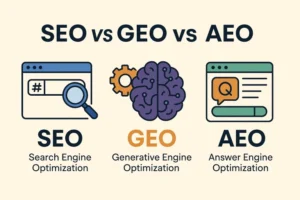
A few years ago, ranking on the first page of Google was the primary goal of every website owner serious about digital visibility. That goal has not disappeared but it is no longer enough on its own. Today, a growing percentage of search queries never result in a click to any website. The answer appears directly in the search interface, generated by AI. Google’s AI Overviews summarize information before the organic results appear. Perplexity synthesizes answers from multiple sources. ChatGPT responds to questions with detailed explanations drawn from its training data and, increasingly, live web retrieval. For business owners, this creates a new question: how do you ensure your website is the source these systems draw from? This guide gives you a practical, step-by-step framework for doing exactly that.

Why AI Search Changes the Game for Your Business
AI search tools do not rank websites the way Google does. They do not return a list of ten blue links ordered by authority and relevance. Instead, they generate a single synthesized answer and they credit the sources they drew from, often linking to them within the response.
Being cited as a source in ChatGPT or Perplexity is the AI equivalent of a first-page Google ranking. It builds brand recognition, drives referral traffic, and positions your business as the expert voice in your category. The businesses learning to optimize for this now are building a significant early advantage.

AI systems are fundamentally question-answering machines. They are trained on vast amounts of text, but when a user asks a specific question, they look for content that directly answers that question not content that dances around it. This means your content strategy needs to change at a fundamental level. Instead of writing about topics, write about questions.
Start by identifying the ten to twenty most common questions your customers ask in sales calls, in customer service conversations, in online reviews, in search queries. Then write a section of content that answers each one directly.
• Use the exact question as your heading. ‘What is the best type of flooring for a kitchen?’ is a better H2 than ‘Kitchen Flooring Options’.
• Answer the question in the first two to three sentences under the heading. Do not build up to the answer lead with it.
• Support the answer with explanation, examples, and evidence in the paragraphs that follow.
• Keep language clear and direct. AI systems prefer precise, confident statements over qualified, hedged language.
This format question heading, direct answer, supporting detail is the single most effective structural change you can make for AI search visibility.
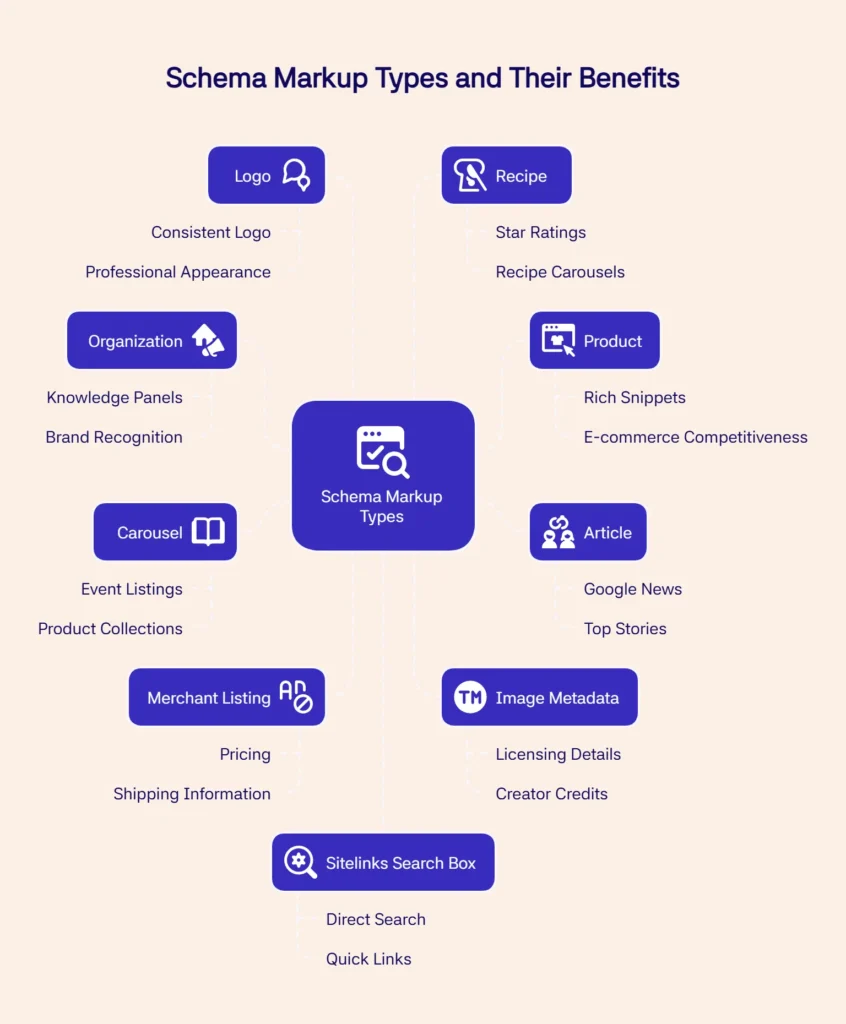
Structured data is code added to your website that tells search engines and AI systems exactly what type of content they are looking at. It is the difference between an AI system guessing what your page is about and knowing with certainty. The most valuable schema types for AI search optimization include:
Structured data does not require coding expertise to implement, but it does require attention to detail. A misconfigured schema can do more harm than no schema at all. If you are not confident implementing this yourself, working with a web design and SEO specialist is a worthwhile investment.
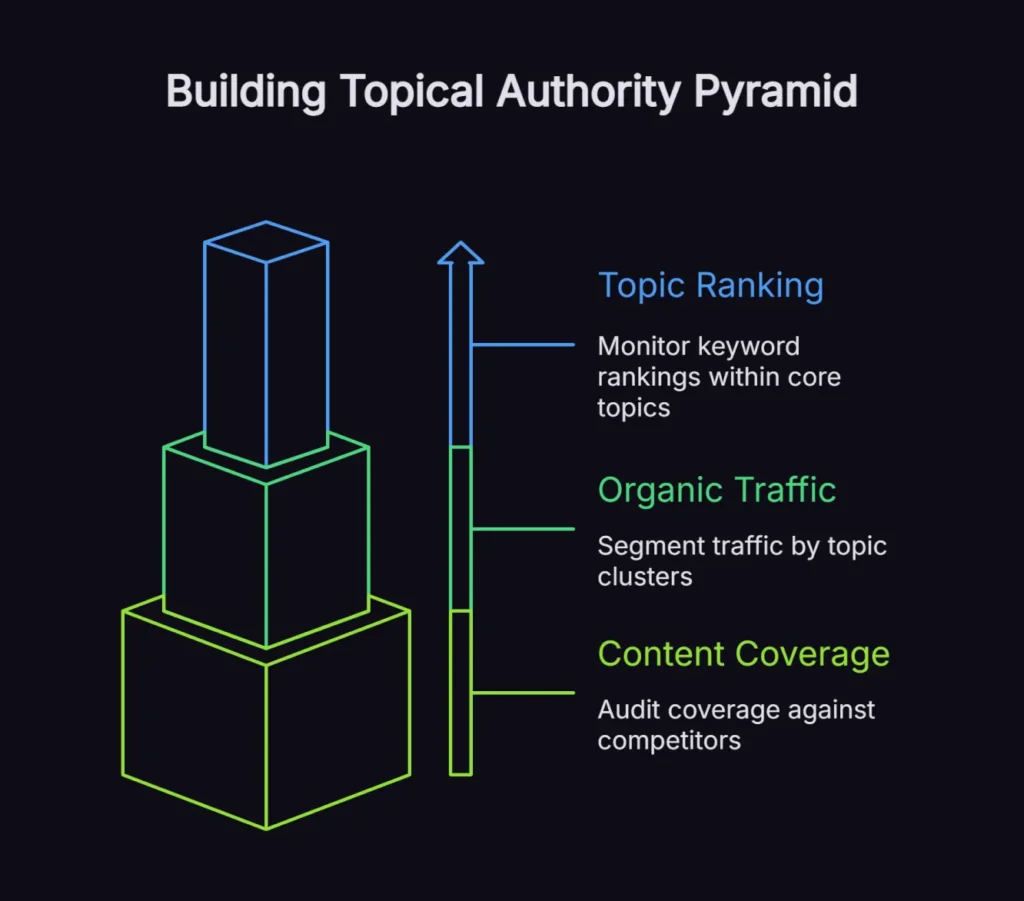
AI systems do not just evaluate individual pages. They evaluate the overall credibility of a website on a given subject. A website that has published one blog post about digital marketing is far less likely to be cited on that topic than one that has published thirty well-researched, interconnected pieces covering every dimension of the subject.
This is the concept of topical authority and it is central to both GEO and modern SEO.
To build topical authority, create content clusters: a comprehensive pillar page on your core topic, supported by a collection of related articles that each address a specific subtopic in depth. Link these pieces together so that readers and AI systems can navigate the full breadth of your expertise.
For a web design agency, this might mean a pillar page on ‘professional web design for small businesses’ supported by cluster articles on topics like page speed optimization, mobile-first design, conversion rate optimization, local SEO for service businesses, and website maintenance best practices.
The depth and interconnection of your content library is one of the strongest signals you can send to AI systems that your website is an authoritative source worth citing.
One of the most common misconceptions about AI search optimization is that traditional link building no longer matters. In fact, the opposite is true. AI systems are trained on data sourced heavily from the web and the sites that appear most frequently as cited, linked-to sources in that training data are the ones that AI systems recognize as authoritative.
Backlinks: links from other reputable websites pointing to yours remain one of the strongest signals of credibility available. In the context of GEO, think of each backlink as a vote that your content is worth referencing.
The goal is to be the source that other credible sources point to. When that happens at scale, AI systems pick up on the pattern.
Traditional keyword research focuses on short, high-volume terms: ‘web design’, ‘SEO services’, ‘digital marketing agency’. AI search works differently. Users ask AI systems full questions in natural language: ‘what should I look for when hiring a web designer for my small business’ or ‘how long does it take to see results from SEO’. Your content needs to match these conversational patterns. This means:
AI systems excel at understanding the relationships between related questions. Content that comprehensively covers a topic from multiple angles, anticipating follow-up questions, is far more likely to be retrieved and cited than a page that addresses a single keyword in isolation.
If you want to make an immediate start on AI search optimization, focus on these high-impact actions first:
These steps will not transform your AI search visibility overnight. But they build the foundation that every more advanced optimization strategy depends on.
Studio 8s specializes in building websites and SEO strategies that are optimized for both traditional search and the new generation of AI-powered discovery tools. From structured data implementation to topical content architecture, our team handles the technical and strategic work so you can focus on running your business. Reach out today to learn how we can help your website get found by humans and AI alike.
Digital Growth Assistant · Online